There’s a quiet shift happening right now in boardrooms, startups, and research labs across the world—a shift most people won’t fully recognize until it’s too late. While the headlines scream about AI taking jobs, disrupting industries, and reshaping economies, a far smaller conversation is taking place among those who truly understand what’s at stake.
That conversation is about training AI.
And here’s the truth: The people who train AI today will set the rules everyone else follows tomorrow.
This isn’t just a catchy soundbite. It’s a historical reality playing out in real time.
Why “Using” AI Isn’t Enough
Right now, millions of people are “using” AI. They type a question into ChatGPT, ask Midjourney for an image, or run a quick code generation prompt. And yes—it’s impressive. AI can summarize a report, write a draft, even spit out a marketing plan in seconds.
But here’s the thing: that’s entry-level.
If you’re just using AI out-of-the-box, you’re essentially working with a generic, public model—a tool built on billions of data points from the internet, designed to serve everyone. It’s smart, yes, but it’s not your smart.
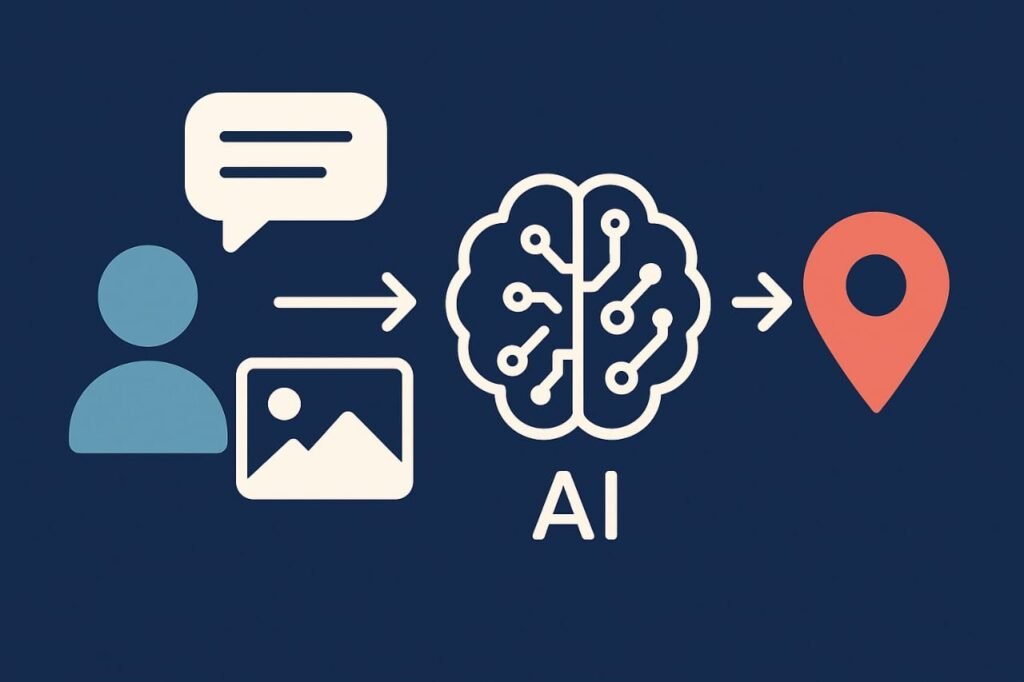
Training AI, on the other hand, means shaping it to think in your voice, act in your style, and make decisions with your priorities in mind. You’re not just a user anymore—you’re a creator of a system that reflects your strategy, knowledge, and values.
And that’s where the real power lies.
The Rulemakers and the Rule-Followers
Let’s be blunt: AI is not going away. It’s only getting better, faster, and more integrated into everything we do.
In every technological revolution, there are two types of people:
- The Rulemakers – those who define how the technology is used, set the standards, and shape the workflows others adopt.
- The Rule-Followers – those who wait until the rules are established and then learn how to work within them.
AI training is the ticket into the first group.
Think about it—Google didn’t invent the internet, but it did define how billions of people search for information. Apple didn’t invent the mobile phone, but it did define the user experience standard for smartphones.
Today, training AI is your chance to define how it works for your niche, industry, or organization before someone else does.
Training AI: What It Actually Means
Many people hear “training AI” and assume it’s a purely technical task involving massive datasets and deep machine learning expertise. But in practice, AI training happens at multiple levels:
- Prompt Engineering – Designing structured, context-rich instructions that teach the AI how to respond consistently and intelligently in your style.
- Fine-Tuning – Feeding the AI examples of desired outputs so it learns your tone, format, and decision-making patterns.
- Data Curation – Providing the AI with proprietary information and case studies to sharpen its accuracy in a specific domain.
- Feedback Loops – Continuously correcting and refining the AI’s outputs so it learns over time.
You don’t need a PhD in AI to train it. What you need is clarity on how you think and how you want the AI to think on your behalf.
Why Early Training Matters More Than Ever
There’s a concept in AI called path dependency—once a system starts learning in a particular way, it’s harder to change its behavior later.
This means that early trainers—those shaping AI right now—are embedding their worldview, priorities, and workflows into the systems that will be used for years to come.
In other words: if you’re not teaching AI your way of doing things, you’ll eventually be following someone else’s way.
And here’s the kicker: these trained systems don’t just serve one person or one company—they often become templates for entire industries.
How Training AI Creates Authority
When you train an AI model, you’re not just customizing a tool—you’re encoding your intellectual property into a scalable system. That’s a form of digital authority.
Here’s why:
- Scalability – An AI trained in your methods can serve thousands of clients, customers, or users without you being physically present.
- Consistency – Your trained AI will respond the way you want every single time—no drift, no dilution.
- Speed – Decisions and outputs that once took hours now happen instantly, but with your signature style and quality.
- Influence – When others adopt your AI workflows, you’ve effectively exported your way of thinking into their operations.
That last point is huge. If you’ve ever wanted to shape an industry conversation or set the standard for excellence in your field, AI training is how you do it at scale.
Real-World Examples
- Customer Service – A company trains AI on its tone, brand values, and product knowledge. Soon, other companies adopt the same AI framework, unknowingly adopting that company’s style as the norm.
- Content Creation – A marketing team fine-tunes AI to follow their storytelling structure. Months later, that structure spreads as “best practice” because so many others copy it.
- Medical Research – A hospital trains AI on its diagnostic methodology. This becomes a benchmark dataset, influencing how future medical AIs interpret cases.
In each example, the trainers didn’t just gain efficiency—they defined the rules of engagement.
The Window is Closing
We’re in a unique moment right now. AI is advanced enough to be massively useful but still early enough that the rules are not set in stone.
Over the next few years, industry-specific AI standards will emerge. The workflows, decision-making patterns, and even ethics embedded in those AIs will come from whoever is training them today.
If you wait until those systems are fully mature, you’ll be locked into playing by rules you didn’t write.
Becoming a Rulemaker
If you want to be in the group that others follow, here’s how to start today:
- Identify Your Edge – What do you know better than most people in your field? This is the foundation of your AI’s training.
- Start Small – Even building a prompt library for your business is a form of AI training.
- Document Your Thinking – The more clearly you can explain your processes, the better your AI can learn them.
- Iterate Constantly – Don’t “set and forget” your AI; keep refining its output until it consistently outperforms human work.
- Deploy and Share – The more your AI is used, the more influence you build over the standard practices in your niche.
Final Word
The industrial revolution had its factory owners. The internet had its platform builders. The AI era will have its trainers—those who didn’t just use the tools but taught them how to think.
And make no mistake: the trainers will be the ones writing the rulebook the rest of the world plays by.
The question is—when that book is written, will you be the author or just a reader?