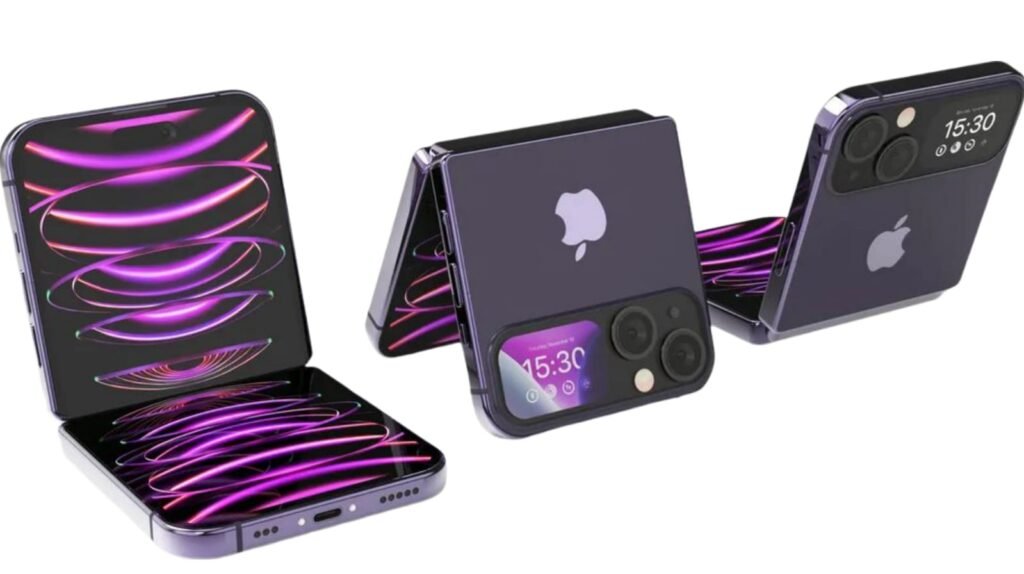
It looks like Apple changes a little bit of its plan. The highlight for several months has been an ultra-thin iPhone Air with lots of rumors flying around, but a recent report says that the project did not meet the expectations. The company is now seemingly revising the concept of foldable iPhones, which it has been talking about, to not only one but two.
Mizuho Securities reports that Apple has cut the iPhone Air production by about one million units. The model’s launch in China was lively at first but sales dropped rapidly. At the same time, other iPhone 17 variants, i.e., Standard, Pro, and Pro Max, are still doing great, and their combined output is anticipated to reach 94 million units by the beginning of 2026.
The iPhone Air with a less than impressive 3,149 mAh battery and a $999 price tag (just $100 less than the Pro) couldn’t keep consumers of its side. The majority of buyers were more than willing to shell out a few extra bucks for a longer-lasting battery and better performance. Some Weibo sources even go as far as to suggest that Apple may cease the production of the Air completely, thus following Samsung’s footsteps and retiring the Galaxy Edge line after the mediocre S25 Edge.
In case these rumors are correct, Apple’s next move would be to put a heavy focus on foldable devices. South Korea’s ET News reports that a book-style foldable iPhone like Samsung’s Galaxy Z Fold might be introduced in 2026, and a clamshell version like the Z Flip in 2028. Stone Partners analyst Kim Ki-hyun also mentioned that Apple has already decided on most of its suppliers, which indicates that the project is out of the research and development phase and is heading toward mass production.
Not all analysts, however, share that confidence. Mizuho thinks the event might be delayed till 2027 as Apple is still working on the hinge mechanism and conducting tests for new display materials. Working prototypes use LTPO panels and COE (Color Filter-on-Encapsulation) technology to make the devices brighter and more energy-efficient while at the same time trying to solve one of the biggest issues with foldable phones, i.e., the noticeable crease running through the display.
Speculations are suggesting that the bigger version might open up to a 7.8-inch mini-tablet and that the smaller clamshell model may be a stylish, pocket-friendly type of iPhone primarily targeted at users who would like a high-quality device but not a heavy one.
Basically, it looks like Apple is prepared to go past “thin” and into “foldable,” which is a change that could fundamentally alter the way the iPhone line of products looks going forward.