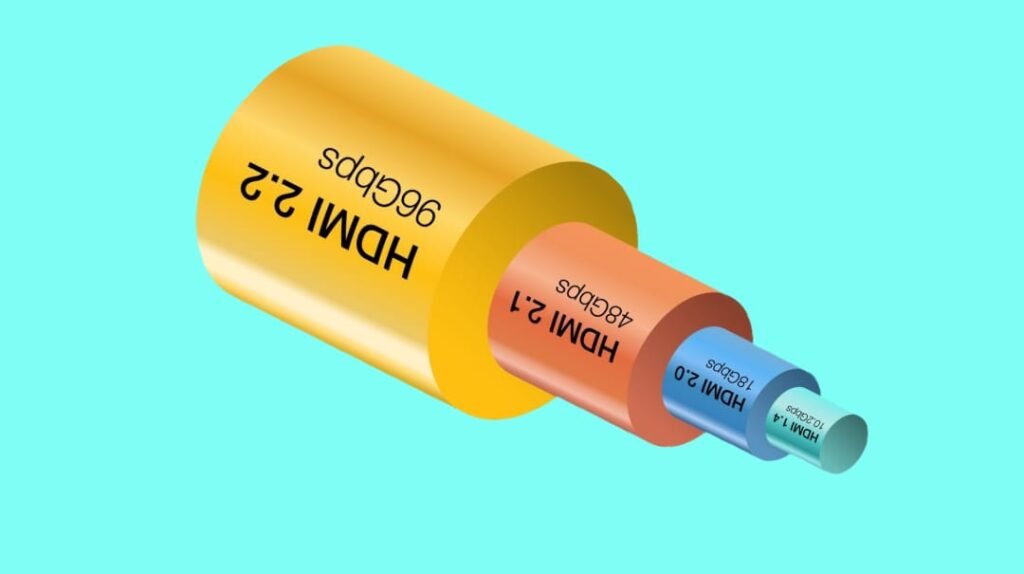
HDMI 2.2 is the next-generation HDMI standard that replaces HDMI 2.1 and introduces support for ultra-high resolutions and refresh rates like 16K at 60Hz and 12K at 120Hz.
The standout feature of HDMI 2.2 is its massive bandwidth capacity; up to 96 Gbps, which doubles the maximum offered by HDMI 2.1. However, the implementation varies by manufacturer. Some devices under the HDMI 2.2 label only support 64 Gbps or 80 Gbps, creating confusion in the market.
HDMI 2.2 Key Features Summary
| Feature | Details |
|---|---|
| Maximum Bandwidth | Up to 96 Gbps |
| Video Resolution Support | 16K@60Hz, 12K@120Hz, 4K@240Hz |
| Color Support | Up to 12-bit color, 4:4:4 chroma |
| Dynamic HDR | Supported (with Source-Based Tone Mapping) |
| Audio Enhancements | Advanced eARC support |
| Gaming Features | VRR, QFT, ALLM, QMS |
| Latency Feedback | Latency Indication Protocol (LIP) |
| New Cable Standard | Ultra96 HDMI |
| Certification | Required hologram + QR code |
| Official Info | https://www.hdmi.org |
Bandwidth Confusion
HDMI 2.2 devices may differ significantly. The label “HDMI 2.2” might mean 64, 80, or the full 96 Gbps depending on the manufacturer. This inconsistency mirrors past issues with HDMI 2.1, where capabilities were also uneven.
The HDMI Forum hasn’t mandated uniform speed under the version label. This can mislead consumers, especially when bandwidth determines whether a display can handle uncompressed 8K video or 4K at 240Hz.
Real-World Benefits
While 16K support grabs attention, few people will use it soon. What matters more:
- 4K at 240Hz is now achievable with no compression.
- 8K at 60Hz with 10- or 12-bit color and full chroma (4:4:4) is possible.
- Support for Dynamic HDR and tone mapping at the source ensures richer, more accurate colors.
Gaming and Entertainment Enhancements
HDMI 2.2 isn’t just about pixel count. It also improves usability and interactivity:
- LIP (Latency Indication Protocol): Shows processing delay in milliseconds.
- VRR (Variable Refresh Rate): Syncs display with GPU output, eliminating tearing.
- QFT (Quick Frame Transport): Reduces input lag.
- ALLM (Auto Low Latency Mode): Switches to game mode automatically.
- QMS (Quick Media Switching): Removes the black screen when changing inputs.
Audio Improvements: A Better eARC
The enhanced eARC in HDMI 2.2 supports higher-bitrate, lossless audio formats with better synchronization between video and sound. For those using AV receivers or soundbars, this means cleaner output and fewer handshake issues.
Goodbye Ultra High Speed, Hello Ultra96
One change that might surprise users: current Ultra High Speed HDMI cables are now obsolete for full 96 Gbps. HDMI 2.2 introduces Ultra96 HDMI cables, a new standard certified for higher throughput.
These cables will be branded with holograms and QR codes to prevent counterfeits, but they’ll also trigger a fresh wave of confusion and price markups for accessories.
Compatibility Issues
Because HDMI 2.2 covers a broad range of capabilities, not all devices labeled with the spec will work together seamlessly. A console that outputs 96 Gbps may still be bottlenecked by a TV or cable that only supports 64 Gbps.
Buyers should check specific performance details, not just the HDMI version number.
Should You Upgrade?
- Yes, if you’re a competitive gamer with a 240Hz 4K monitor.
- Yes, if you’re building a high-end 8K home theater system.
- No, if you’re happy with HDMI 2.1 and don’t plan to change displays or media sources soon.
For most users, HDMI 2.1 remains fully adequate, especially since there’s no widely available 16K or 12K content.
Final Word on HDMI 2.2
HDMI 2.2 offers meaningful improvements for power users, but isn’t a must-have for everyone. Its full potential lies in professional setups and future-proofed systems rather than everyday home use for now.