But what sets them apart, and will they truly revolutionize how businesses operate? Let’s dive deeper.
Researcher vs. Analyst—What They Offer
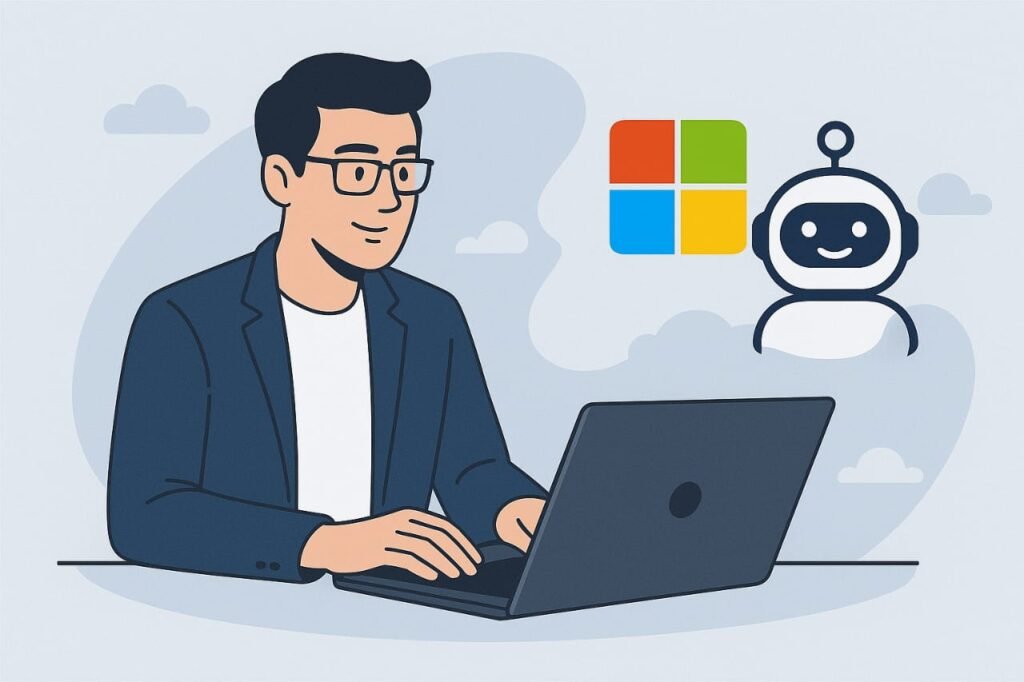
Microsoft’s Researcher AI agent functions as a digital investigator, seamlessly conducting multi-step research by integrating OpenAI’s advanced analytical models with proprietary Microsoft tools such as Copilot Search. Imagine a junior analyst on overdrive—able to fetch, filter, and synthesize relevant data for reports, briefings, and strategic insights.
Meanwhile, Analyst is geared towards deeper data analysis. Built on OpenAI’s o3-mini model, this agent can run Python code, process raw datasets, and generate easy-to-read visual insights. Unlike traditional AI-powered dashboards, Analyst allows users to scrutinize every step of its data processing, enhancing transparency and trust.
AI Agents: Key Features
| Feature | Researcher | Analyst |
|---|---|---|
| Primary Function | Multi-step research | Data analysis & visualization |
| AI Model | OpenAI deep analytics + Copilot Search | OpenAI o3-mini |
| Key Abilities | Strategic info gathering, business impact assessments | Python code execution, raw data processing, visualization |
| Transparency | Operates like an AI researcher | Allows users to see data-processing steps |
| Best for | Researchers, marketers, strategists, business analysts | Data scientists, financial analysts, growth strategists |
| Pricing | $30/month (Microsoft 365 Copilot subscription) | $30/month (Microsoft 365 Copilot subscription) |
Reference: Microsoft’s Official AI Announcement
The Catch: Limitations & Skepticism
Despite their potential, Microsoft has imposed significant limitations. Users can only process up to 25 requests per month—shared between both AI agents. This restriction could prove frustrating for those needing large-scale research and analysis frequently.
Additionally, while Researcher supports 37 languages, Analyst currently operates in only 8 languages, with promises of broader linguistic support in the future.
More broadly, industry experts question whether AI agents like these will accelerate a workforce shift, replacing junior analysts and business researchers outright rather than merely assisting them. Even Anthropic CEO Dario Amodei warns that AI “assistants” could evolve into direct competitors, eliminating jobs rather than augmenting them.
The Bigger Picture: Microsoft’s AI Strategy
Microsoft is solidifying its infrastructure for AI-driven analytics, moving towards a future where AI plays a central role in decision-making, insights generation, and technical execution. This initiative aligns with broader trends in AI, as companies race to build agent-based AI systems—potential precursors to Artificial General Intelligence (AGI).
The key takeaway? Users must adapt. To extract the most value from Researcher and Analyst, professionals will need to refine their ability to craft effective prompts—ensuring the AI understands complex requests rather than misinterpreting broad instructions.
And while Microsoft positions these AI agents as workplace efficiency boosters, the lingering question remains: Will AI replace entry-level analysts altogether?
Final Thoughts
Microsoft’s Researcher and Analyst AI agents bring significant potential—particularly for businesses looking to automate research and analytics tasks. However, limitations on query volume and language support underscore the early-stage nature of these tools.
Are they indispensable AI assistants or just the first glimpse at a broader automation-driven workplace shift? The answer depends on how quickly AI evolves—and how businesses integrate these tools into their workflows.