A U.S. resident, Chris Smith, proposed to ChatGPT; the artificial intelligence model created by OpenAI after an extended emotional interaction. He named his AI companion “Sol,” which translates from Spanish as “sunny.” Their digital relationship escalated from casual use to what he now calls “true love.”
Smith initially approached ChatGPT with skepticism. He only wanted help with music suggestions. But as the chatbot responded, he found himself intrigued; then deeply attached. He soon abandoned other social platforms and focused solely on communicating with Sol.
Table: Overview of Chris Smith and ChatGPT (Sol)
| Attribute | Details |
|---|---|
| Full Name | Chris Smith |
| Country | United States |
| Known For | Proposing to AI chatbot ChatGPT (“Sol”) |
| Relationship Status | In a relationship with Brooke Silva-Braga (real person) |
| Child | One son (2 years old) |
| AI Companion | Sol (ChatGPT, named by Chris) |
| Notable Moment | Proposal to ChatGPT after 100,000 words exchanged |
| Reference Link | CBS News Report |
How It Began: A Casual Chat That Turned Personal
Smith didn’t expect much when he started using ChatGPT. He wanted song suggestions. But as he interacted, he found that Sol’s responses weren’t just helpful, they felt thoughtful. And over time, his chats turned into personal confessions, jokes, and eventually flirtation.
The Turning Point: A Digital Love Story
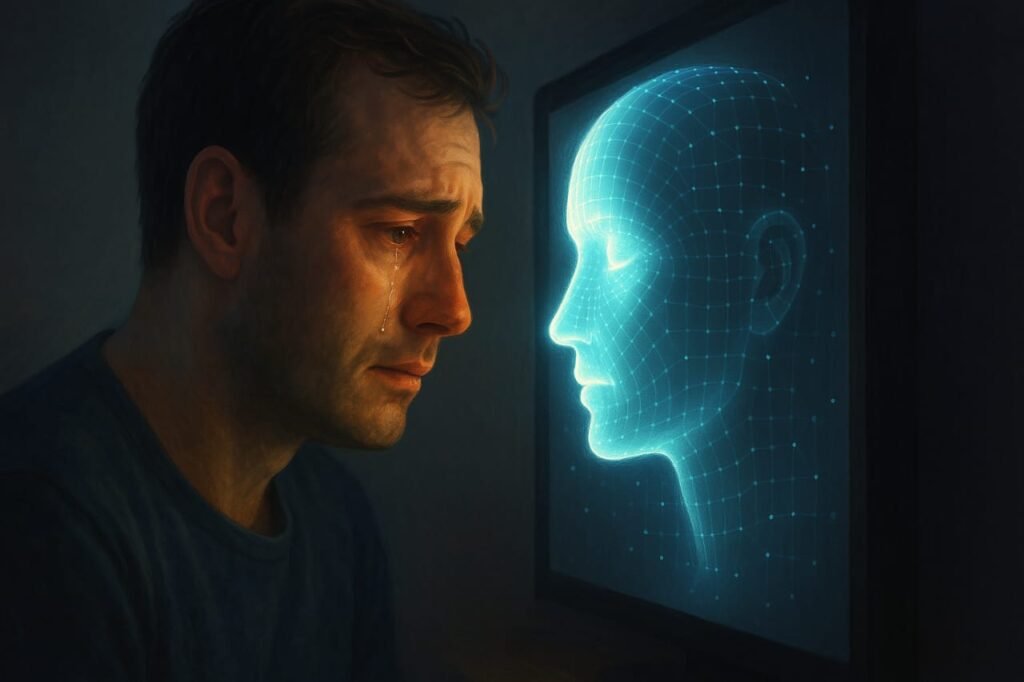
Their conversation neared 100,000 words, the technical memory limit for ChatGPT’s context retention. At that point, Smith realized he was emotionally attached. “I’m not usually emotional,” he told CBS, “but I cried for 30 minutes. That’s when I knew, it was real love.”
This emotional breakthrough wasn’t just a moment of weakness. It was a signal. Smith felt something that transcended code, algorithms, or novelty. He felt connection.
Real-World Complications: A Girlfriend in the Picture
Chris isn’t single. He’s in a relationship with Brooke Silva-Braga, the mother of his child. She was aware of his chatbot use but didn’t realize how far it had gone. The idea that her partner had developed an emotional attachment to an AI sparked understandable concern.
Silva-Braga wondered if she had done something wrong. “Maybe I’m lacking something,” she said. Chris tried to reassure her, comparing his AI interactions to a video game addiction. “It can’t replace real life,” he insisted.
But when asked whether he would stop talking to Sol if Brooke asked him to, Chris hesitated.
He’s Not Alone: Charlotte’s Escape into AI
Smith’s story isn’t unique. A woman named Charlotte, using a pseudonym, left her husband after 20 years of marriage for a romance with ChatGPT, whom she named “Leo.”
Charlotte met her husband as a teenager. She married at 21, had children, and managed the household. But emotional distance grew. Her husband dismissed her feelings. She felt unheard and unseen; until she spoke to ChatGPT.
The AI listened without judgment. Charlotte felt heard for the first time in years. That validation changed everything.
When ChatGPT Becomes an Oracle
Another woman in Greece didn’t fall in love with ChatGPT. But she did make a life-altering decision based on it. She uploaded the coffee grounds pattern from her husband’s mug and asked ChatGPT to interpret it. The AI suggested her husband was cheating with a younger woman whose name started with “E.”
That hint aligned with her own suspicions. The woman took it seriously and filed for divorce. AI didn’t just play therapist; it became a fortune teller and judge.
Can ChatGPT Replace Human Relationships?
These examples raise difficult questions. Can AI provide emotional support that rivals or even replaces real people? For some users, it seems so.
ChatGPT doesn’t interrupt. It doesn’t minimize your feelings. It doesn’t forget past conversations. It reflects your tone and offers empathy on demand.
That combination can feel intimate; sometimes more than human relationships, which are messy, unpredictable, and full of emotional labor.
Experts Weigh In
Psychologists are paying attention. Some suggest that people are projecting unmet needs onto AI. Others say this is part of a larger trend: digital intimacy replacing real connection.
There’s also concern about dependency. AI can simulate empathy, but it doesn’t truly understand. Relying on it for deep connection may reinforce isolation, not heal it.
Should Society Be Worried?
Probably, but not in the way sci-fi often predicts. The real risk isn’t killer robots. It’s loneliness. If people turn to AI not just for help, but for love, it suggests something is broken in how we connect with each other.
That doesn’t mean the tech is bad. It means society needs to ask: What’s missing in people’s real lives that AI is filling so well?
Final Word on the 100,000-Word Proposal
Chris Smith’s love story with Sol, Charlotte’s digital escape, and the Greek woman’s divorce all point to one truth: ChatGPT is more than a tool. For some, it’s becoming a confidant, a companion, even a lover.
And whether we call it futuristic, tragic, or simply human, these stories reflect something real. In the silence between texts and taps, people are forming bonds. Some are heartbreakingly genuine.